Tree Trimming & Pruning
Tree Trimming & Pruning That Keeps Trees Healthy
Careful cuts that make your trees safer to live around and help them grow strong for years.
- Family-owned since 1989
- Licensed, bonded & insured
- Licensed #1197
- Price-match guarantee
- 24/7 emergency service
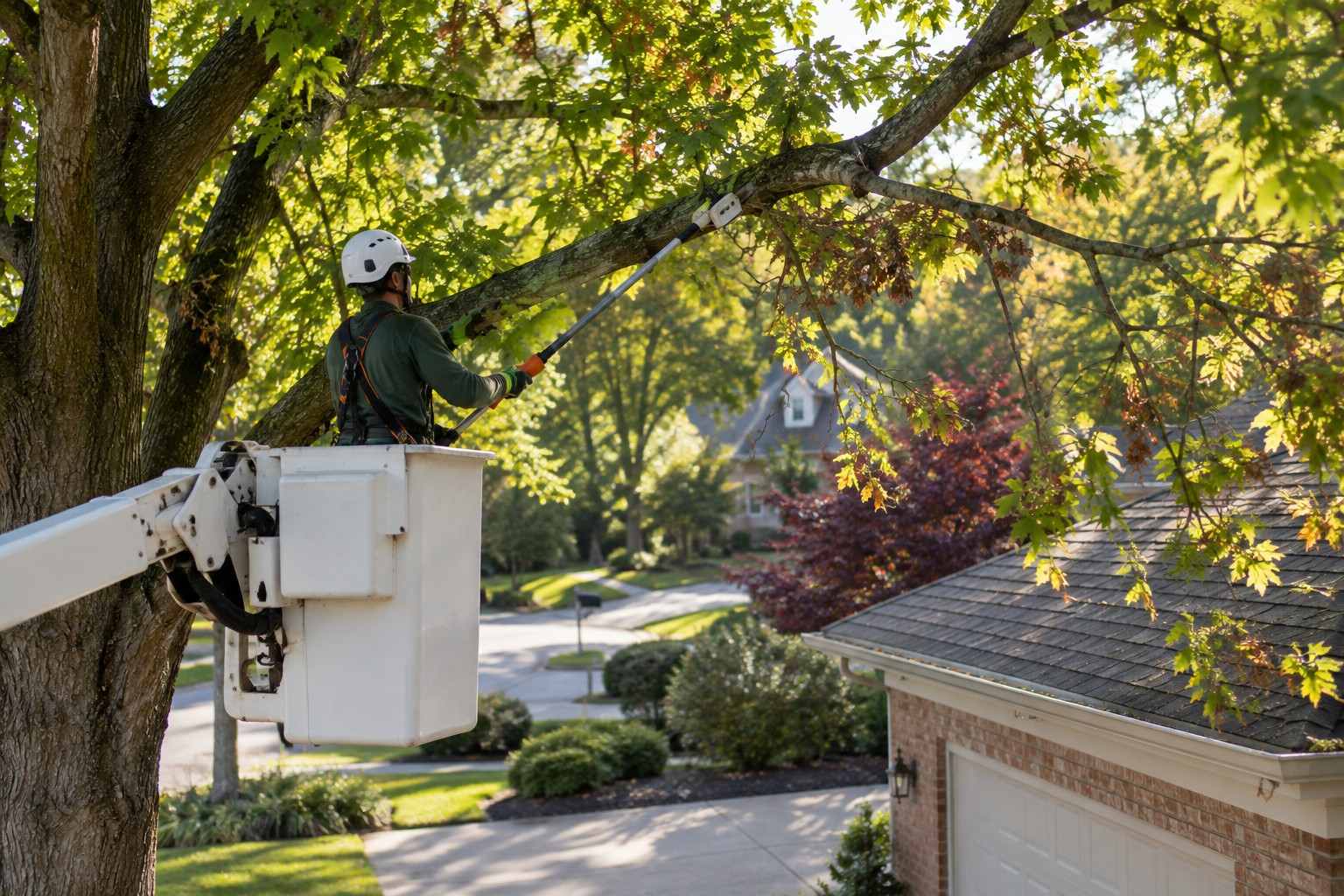
Tree trimming and tree pruning mean nearly the same thing: cutting selected branches on purpose to get a certain result. Good pruning removes weak or dead wood, lets more sunlight reach your yard, opens a view, and helps a tree stand up to wind and ice.
Most of the time, trees are pruned to make them safer to live around or to correct a defect before it becomes a problem. Removing dead branches keeps them from falling on your roof or car. It also stops decay in the dead limb from spreading into healthy wood.
Garcia’s Tree Experts has pruned trees across Maryland, DC and Northern Virginia since 1989. Our climbers work carefully around houses, fences and power lines, and every job starts with a free estimate.
Common problems pruning can fix
- Co-dominant stems: two main trunks of equal size that can split apart in a storm.
- Branches that cross and rub against each other.
- Broken, dead, diseased or deformed branches.
- A crown that is too dense, so wind cannot pass through and light cannot reach the lawn.
- Too much weight at the end of a long branch, or one branch too large for the tree.
- Limbs hanging over your roof, blocking a view, or brushing the house after storm damage.
- Trees planted too close together, or a tree that has grown misshapen.
How we prune
Look before we cut
We identify the tree species and its condition first. Some trees have their own rules about when and how much to prune.
Agree on the goal
Safety, clearance from the roof, more light, a better view or a healthier shape. We explain what we will cut and why.
Make clean, correct cuts
We cut at the right spot on each branch so the tree can seal the wound. Smaller cuts made more often are better than large cuts made rarely.
Climb without spikes
Climbing spikes wound a living tree, so we do not use them for pruning. We use ropes, saddles and bucket trucks instead.
Clean up
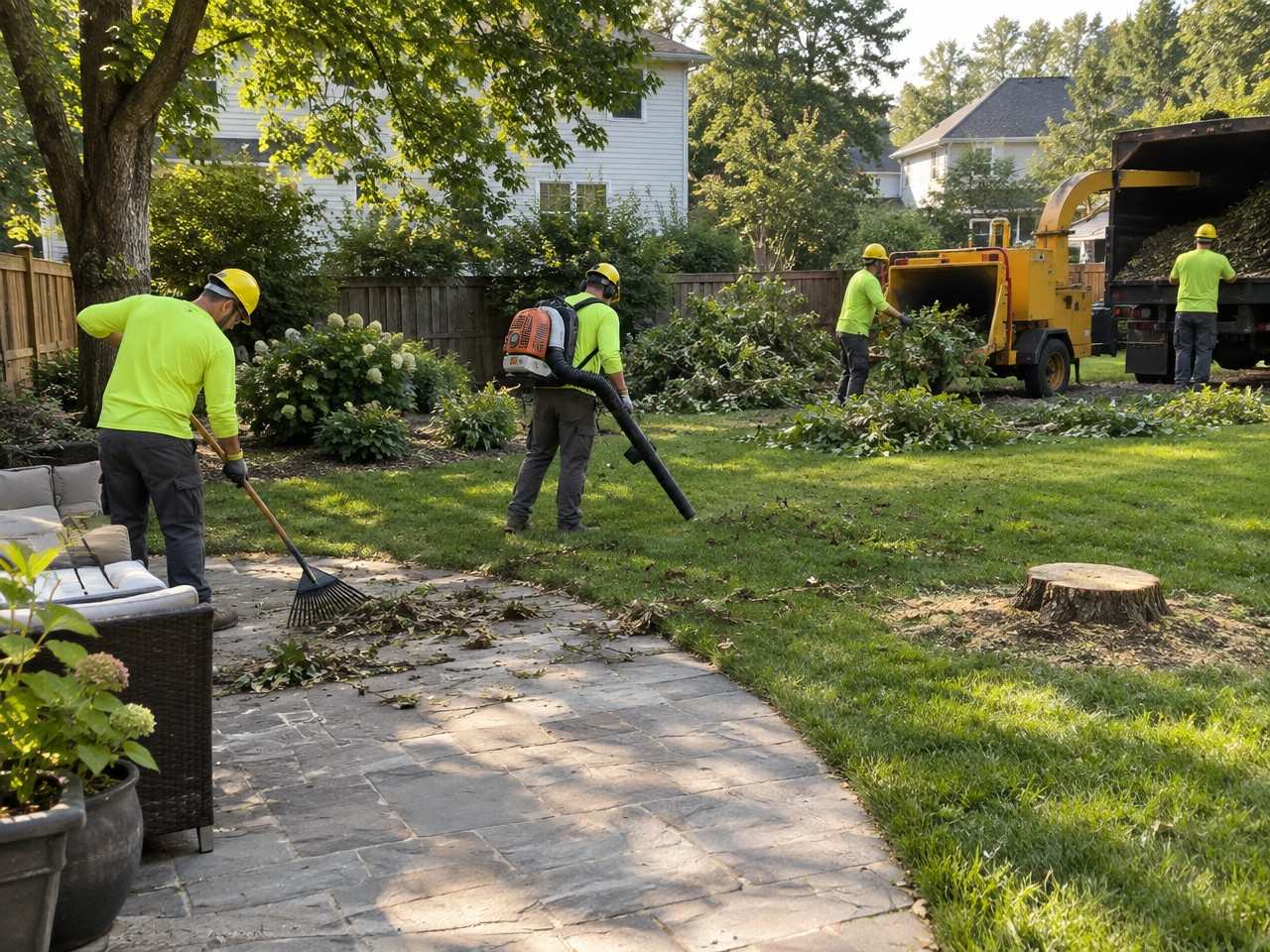
We chip the branches, haul away the debris and leave your yard neat.
Pruning done right (and why we don’t top trees)
Topping harms trees. Cutting the whole top off a tree leaves large wounds, invites decay, and causes weak, fast-growing sprouts that break easily. Industry pruning standards discourage it. When a tree is too tall or too wide, we use crown reduction instead: we shorten limbs back to a healthy side branch so the tree keeps its natural shape and strength.
We also do crown thinning (removing some inner branches so wind passes through), crown raising or elevation (lifting low limbs off roofs, sidewalks and driveways), and deadwood removal. Near power lines we keep a safe distance; the utility company handles the lines themselves.
What affects the cost of pruning
We price each pruning job after we see the trees. These are the biggest factors:
- The size of the tree and how many trees you want pruned.
- How much work is needed: a light deadwood clean-up or a full crown reduction.
- How close the branches are to your house, wires or other structures.
- Access for our bucket truck, or whether our climbers must do the work by rope.
- How much brush there is to chip and haul away.
The best time of year to prune
Some species have special needs, but these general seasonal tips work for most trees in our area:
- Spring: prune flowering trees soon after the blossoms fall.
- Summer: keep pruning light, but removing dead wood is fine.
- Fall: remove dead wood and make smaller live cuts.
- Winter: the best time to prune most trees, especially for larger cuts. Trees are dormant, sap flow is low, and with the leaves gone there is less brush.
Winter savings
Because winter is such a good time to prune, we offer a 10% winter discount on regular residential work (one per customer, not for emergency or commercial work, and it must be presented to the estimator), plus 0% interest payment plans in winter. HOAs and homeowners can also set up a recurring maintenance plan that follows each tree’s natural cycle.
Frequently asked questions
How often should my trees be pruned?
Most mature shade trees do well with pruning every few years. Young trees benefit from lighter, more frequent pruning to build good structure. We will suggest a schedule that fits your trees.
What is the difference between trimming and pruning?
In everyday use they mean almost the same thing. Both are selective cutting of branches. Some people use “trimming” for shaping and “pruning” for health and safety work, but we do both.
Can you make my tree shorter?
Yes, with crown reduction. We shorten limbs back to healthy side branches so the tree stays strong and natural looking. We do not top trees, because topping is harmful and leads to weak regrowth.
Do I need permission to prune a tree on my property line?
Rules vary, and many HOAs have their own. In general it is best to talk with your neighbor first. We can explain what we see at the estimate so you can decide.
Will pruning hurt my tree?
Correct pruning helps the tree. We make clean cuts at the right spot, never remove too much at once, and do not use climbing spikes on trees we are saving.
Can you trim branches near power lines?
We work near power lines safely and keep the required distance. The wires themselves belong to the utility company. If branches are touching a line, call the utility first and we will handle the rest of the tree.
Get your free estimate
Pick a day and time for your free on-site estimate.
Open the booking calendar in a new tab Prefer to call? (301) 464-2596
Other services
-
Tree Removal
Any size tree, even near houses, fences and power lines. -
Stump Grinding
Grind stumps below grade so you can mow, plant or build. -
24/7 Emergency Tree Service
Fallen or hanging trees after a storm. We answer day and night. -
Crane Tree Removal
We own our cranes. The safest way to take down big trees over homes. -
Land & Lot Clearing
Clear lots, brush and storm debris, and haul it all away. -
Commercial & HOA Tree Service
Recurring maintenance for HOAs, property managers, churches and government.
Areas we serve
- BowieBowie & Prince George's County, MD
- GaithersburgGaithersburg & Rockville, MD
- Silver SpringSilver Spring & Bethesda, MD
- Washington, DCWashington, DC
- Oxon HillOxon Hill & Fort Washington, MD
- AnnapolisAnnapolis & Anne Arundel County, MD
- Ellicott CityEllicott City & Howard County, MD
- BaltimoreBaltimore, MD
- WaldorfWaldorf, Charles & Calvert County, MD
- Northern VirginiaNorthern Virginia